Technique serves the story of a piece.
We treat scales, studies and repertoire as connected parts of one musical practice.
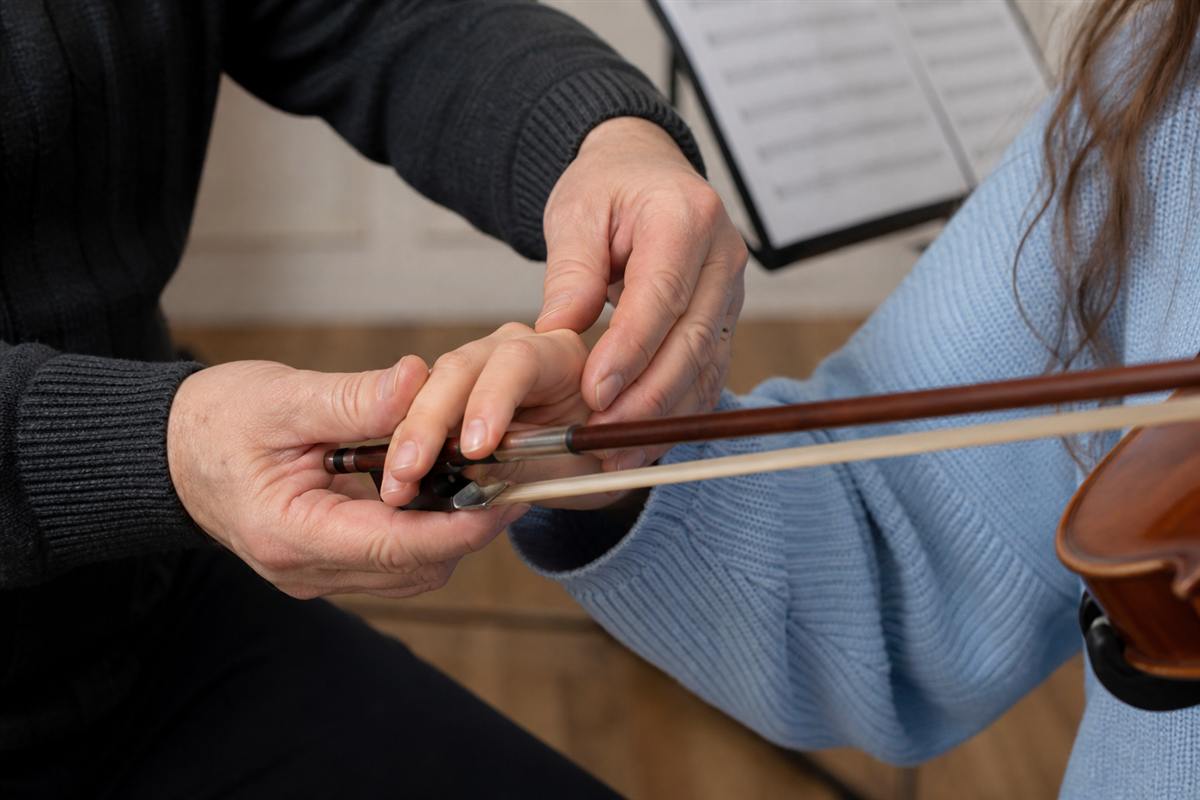
Start with the sound.
The violin is sensitive to tiny changes. Rather than burying that sensitivity under instructions, we use it. A bow angle, a flexible thumb, a breath before a phrase or a clearer inner pulse can change what you hear immediately. Technical work is therefore specific: it is there to make the next musical choice easier.
We work slowly enough to notice cause and effect, then carry that attention into real music. This helps adult players practise with confidence between lessons, even when their time is limited.
Music to grow with.
Repertoire is chosen for the player, not for a fixed syllabus. Early lessons may move through folk material, simple classical melodies and short studies. Later work can include Baroque dances, Classical sonatas, Romantic miniatures, film themes or music from a player’s own listening life.
Some pieces become long companions. Others are useful for a single skill and then make way for something new. We can also prepare an informal performance for friends or simply learn music for the private satisfaction of playing it well.
A practice that survives the week
Practice does not need to be heroic. We suggest small, ordered tasks: a minute for setup, a bowing pattern, two troublesome bars, then a passage that reminds you why you picked up the violin. A notebook or phone recording can help you retain the observations from a lesson. The goal is consistency and honest listening, not a perfect streak.